
Best Survival Spears: Top 5 Picks, Tests & Field Tips
Why a spear still earns a place in your kit
A good spear solves problems a knife or jungle machete can’t. Reach keeps you safer around feral pigs (think boar spear hunting) or snakes, and a pointed tip lets you probe water, check depth, or pin something you don’t want near your hands. In camp, a tough head on a wood spear shaft doubles as a roasting stick, fish gig, or quick camp tool. Whether you lean traditional spear (long ash shaft, simple leaf head) or modern tactical spears (modular heads, compact shafts), the idea is the same: sturdy spear handle, confident grip, and a tip that bites.
Materials matter. Carbon steel and spring steel bring edge bite and toughness; stainless resists rust. Head geometry—lugs on a bear spear or boar spear vs a slim skewer—changes how it penetrates and stays put. We’ll weigh those details next, then break down the tip of the spear picks that actually work in the bush.
Spear types & where each shines (quick primer)
1) Fixed-shaft “traditional spear”
Think long wooden shaft (native spear – wooden shaft) with a leaf or diamond head. Great reach, simple to control, and naturally stable if the shaft is straight and dense. Best for thrusting, camp utility (probing, lifting pots), and controlled pinning. Look for heads in carbon steel, spring steel, or high manganese steel for the most desirable resilience. A slightly longer spear tip length with moderate head width tracks straight and gives good accuracy. Downsides: transport and storage—unless it breaks down (see below).
2) Modular spearheads (stick-mount)
A compact head that lashes or screws onto a found wood spear shaft. This is the lightest, most packable route—good when you’re already carrying a survival knife and want a minimalist “add-on” for fishing or small-game control. Favourites include clamp-on plates and threaded adapters (e.g., heads similar in format to SOG Spirit or Schrade styles). The win: outstanding packability and material choice of hunting spear shafts on the fly. Watch for poor interfaces that wobble or loosen.
3) Break-down / takedown “tactical spears”
Metal or composite shafts in sections, often with modern sheaths (some market “Vortec sheath”-style retention) and aggressive points. These travel well and stow inside a pack, next to a basic shovel or poles. They’re strong for thrusting; some balance well enough for a powerful throwing spear but most are optimised for control rather than distance. Choose models with a strong center-of-gravity and secure ferrules; weak joints risk blade fracture under torque.
4) Winged/guarded boar & bear designs
A winged spear design adds lugs/guards behind the blade—classic boar spear hunting logic. The idea is simple: penetrate, then the wings check forward travel to manage wounded game movements and keep the head working in the vitals target area without over-penetration. They’re heavier but confidence-inspiring. Expect broad, tough heads in carbon or stainless steel spear formats; the latter brings weather resistance, the former bite and toughness.
5) Throwing-first vs thrust-first heads
Slim profiles with narrow head width and long spear tip length favour distance and penetration (throwing). Broader blades with small lugs favour retention and control (thrusting/containment). Decide first what you’ll actually do most; design drives success more than brand hype.
6) Specialty and “modern twist” formats
-
Kommando Talon Survival Spear & Vortec-style marketing often points to aggressive fastening and grippy sheaths—useful if you’re in wet scrub and want solid retention.
-
“Sabotage” or “cyclone spear” patterns (spiralled/tri-edged) aim for deep cutting and a reliable battle edge, but can be harder to sharpen in the field.
-
Decorative feather accents or leather wrappings – overall length details can improve grip—or get soggy and slippery. Treat them as functional if they help handling, not just for looks.
7) Steel choices in one minute
-
High carbon steel (sometimes advertised as the perfect balance of a high carbon content) = great edge and toughness; needs oil and care.
-
Spring steel = elastic toughness; ideal where shafts flex and impacts are messy.
-
High manganese steel = noted for work-hardening and natural resilience.
-
Stainless steel blade = better corrosion resistance; choose reputable heat-treats among the best modern blade-smithing steels to reduce tip rolling.
8) Sheaths and transport
A reliable sheath—polymer or leather—matters as much as the head. Look for positive retention (clicks, straps), drain holes, and belt/lashing options. Good sheaths protect you, your pack, and your mates when hopping out of utes or even golf carts on property tracks.
Top 5 Picks
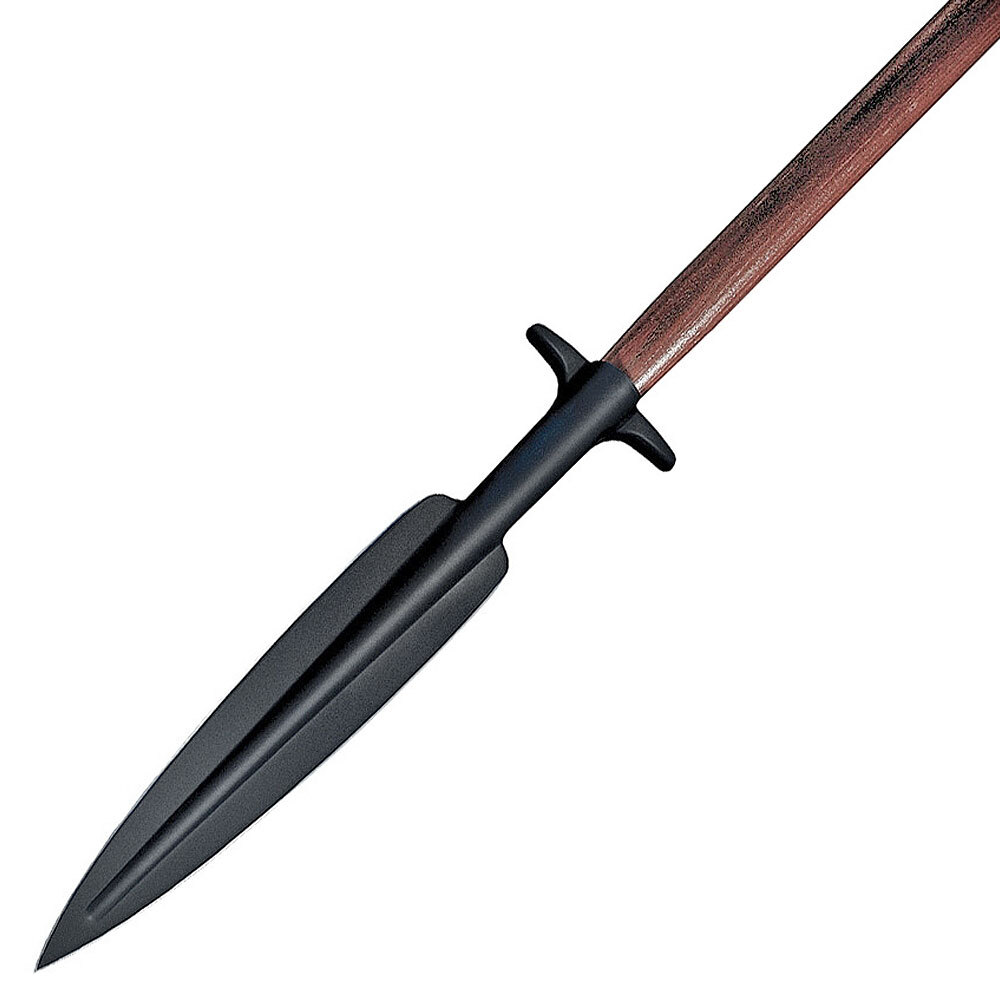
1. Cold Steel Boar Spear (winged spear design) - Score: 7.75/10
Source: Extac
Why it stands out
A proven winged spear design built for boar spear hunting. The broad, lugged head helps control penetration and keeps the blade working in the vitals target area instead of slipping through—exactly what you want when you need retention and authority. It’s a classic traditional spear idea executed with modern metallurgy.
Materials & build
Cold Steel’s heads are typically high-carbon (carbon steel) with a solid heat-treat—tough, keen, and less prone to blade fracture than cheaper cast heads. The shaft is long and stout (traditionally ash), giving a strong center-of-gravity for thrusts and controlled pins. You’ll need to oil the head; stainless exists in other models, but the carbon version gives that reliable battle edge feel. Think “spring steel vibes” in toughness, even if the exact characteristics of this steel vary by batch.
Tip geometry & control
A generous head width and moderate spear tip length deliver decisive penetration with stability. The side lugs act like brakes—excellent when wounded game movements are unpredictable. It isn’t a powerful throwing spear by design; it’s best as a thrust-first tool.
Real-world use cases
-
Property control (feral pig containment), where retention matters.
-
Camp probing, pushing, controlled pinning when you don’t want your hands near the job.
-
Defensive stand-offs around scrub or creek lines where reach helps.
Packability & carry
This is the trade-off. A full-length shaft doesn’t break down, so transport is awkward compared with modular tactical spears. If your kit lives in the ute, that’s a good thing—no joints to loosen. Foot travel over long distances? Consider a modular head instead.
Assembly & ease of use
Factory-assembled or straightforward to mount. It’s the “right size” for serious work out of the box—no hunting for the perfect wood spear shaft. The supplied hardware holds up if you keep screws snug.
Weather & corrosion
Carbon needs care. Dry it, wipe on oil or paste wax. In tropical wet or salt spray, carbon can spot quickly; a stainless steel spear is lower maintenance but usually gives up a little bite.
Safety & legal
Use the supplied sheath (some vendors sell Vortec sheath-style locks) and secure the cover when moving through thick brush. As always, check local rules—some states/territories restrict edged or spear-type tools (often under “prohibited weapons” or a category l-style classification, depending on jurisdiction).
Pros
-
Tank-like durability and retention; classic bear spear/boar spear control.
-
Excellent balance for thrust-first roles; pointed tip tracks true.
-
Minimal moving parts; confidence under load.
Cons
-
Poor packability; not ideal for lightweight trekking.
-
Carbon steel needs regular care; rusts faster than a stainless steel blade.
-
Overkill for simple camp chores where a survival knife or basic shovel will do.
Best for
Ranchers, property managers, and anyone prioritising retention and control over maximum portability.
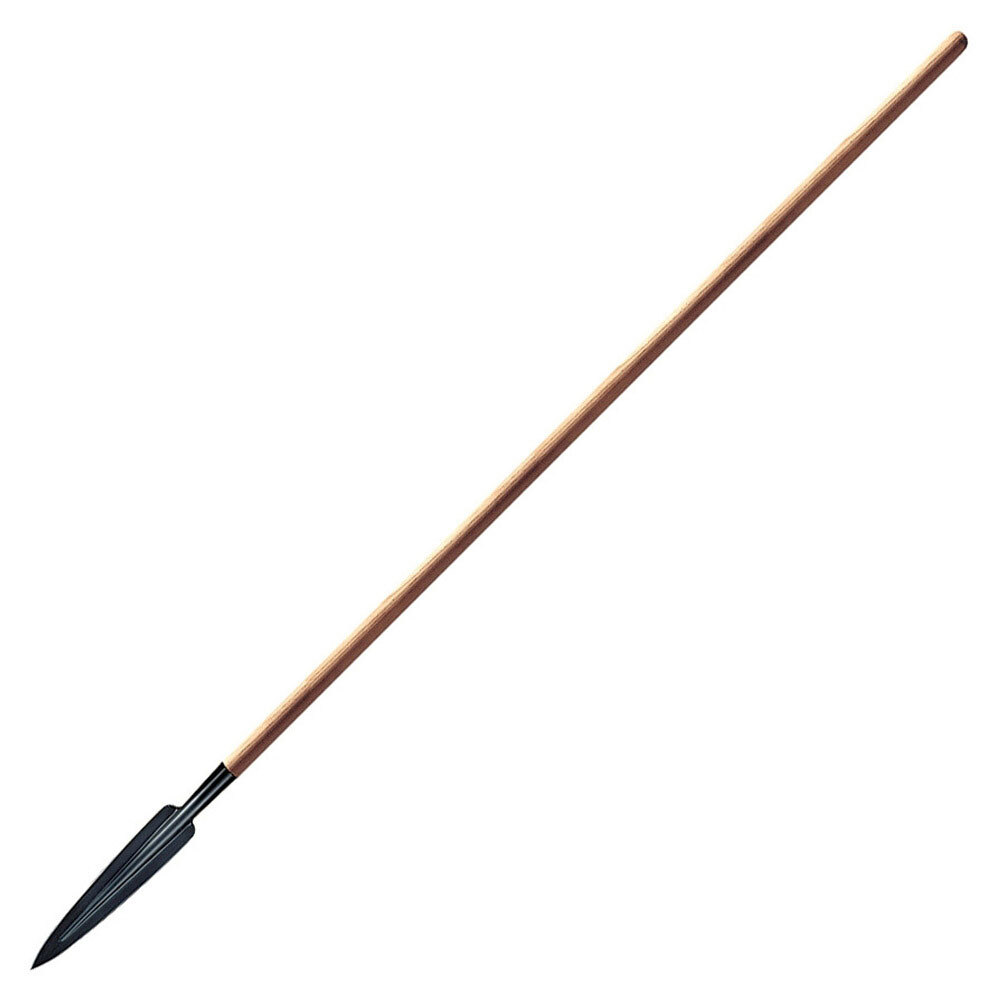
2. Cold Steel Assegai (Long Shaft) — traditional reach, modern toughness - Score: 7.7/10
Source: Extac
Why it stands out
If you want a traditional spear profile with genuine reach and a lively feel, the Assegai nails it. The long shaft and leaf-shaped head give a strong center-of-gravity that tracks straight on thrusts and, unlike many “tactical” designs, it can double as a powerful throwing spear when you’ve got the space and skill.
Materials & build
Cold Steel typically heat-treats a high-carbon formulation for bite and resilience—similar payoffs to spring steel in toughness when impacts get messy. You don’t get the absolute corrosion resistance of a stainless steel spear, but you do get edge authority and fewer worries about tip roll. The ferrule and hardware are robust; no flimsy inserts to invite blade fracture. (Exact characteristics of this steel vary by run; treat it like quality carbon with decent temper.)
Tip geometry & control
Moderate spear tip length and mid head width make it fast through hide while keeping track into the vitals target area. There are no lugs (unlike a boar spear/bear spear), so it’s more about clean penetration and quick recovery than hard retention. That’s ideal for versatility—camp tasks, probing, small-game work—where you don’t need wings.
Real-world use cases
-
Foot travel where you want reach without dead weight.
-
Mixed bush and creek lines where one tool must poke, prod, and occasionally pin.
-
Practice throws on open ground (build skill before distance—focus on good accuracy first).
Packability & carry
Compared with modular tactical spears that break down, the long Assegai is awkward on public transport but fine on utes and rural tracks. For backpacking, consider the short-shaft variant or a head-only solution you can mount on a found wood spear shaft/native spear – wooden shaft.
Assembly & ease of use
Comes ready for work—no hunting for the right size broom handle or spacers. The shaft-to-head interface is solid; keep hardware snug and check seasonally.
Weather & corrosion
Carbon needs routine care. Wipe down after rain, add oil or paste wax, and keep the sheath on when not in use. If you operate in monsoonal wet, stainless is lower maintenance but may give up some penetration “bite.”
Safety & legal
Sheath up when moving through scrub. As with any edged tool, check local rules (some regions push these into a regulated class—think the spirit of a category l-style restriction—even if the wording differs). Train slowly; fast throws come after consistent mechanics.
Pros
-
Classic handling; excellent reach and point control.
-
Strong head/shaft union; inspires confidence on thrusts.
-
Versatile across camp chores and field practice (thrust-first; can throw).
Cons
-
Full length hurts packability; doesn’t break down.
-
Carbon maintenance load (vs stainless steel blade options).
-
Lacks lugged retention for boar spear hunting scenarios.
Best for
Readers who favour a nimble traditional spear with balanced handling and broad usefulness over lugged retention.
3. United Cutlery M48 Survival Spear — modern, grippy, ready to go - Score: 7.9/10
Why it stands out
The M48 is the poster child for tactical spears: aggressive head, durable polymer shaft, and a sheath system that actually stays put. If you want something you can pull from the boot and put straight to work—no hunting for a wood spear shaft—this is the easy button.
Materials & build
United typically pairs a corrosion-resistant steel head (varies by run; often stainless or coated high carbon) with a reinforced fibre/polymer shaft. The result is low maintenance and plenty of stiffness for thrusting. Stainless versions behave like a stainless steel spear—less babying than carbon—and coatings help with natural resilience against the elements. You won’t get the same bite as a bespoke spring steel or high manganese steel head, but you do get a forgiving, field-ready package.
Tip geometry & control
A long spear tip length with a modest head width means fast, straight penetration and good accuracy. It’s a thrust-first design; while throws are possible, the balance and strong center-of-gravity favour control over distance. No lugs—so unlike a winged spear design for boar spear hunting, this prioritises in-and-out speed.
Real-world use cases
-
Property checks, creek banks, scrub edges where reach matters.
-
Camp utility and probing when you’d rather not risk your hands or your survival knife.
-
Wet, muddy conditions where a low-maintenance setup shines.
Packability & carry
Better than full-length timber spears, but still a one-piece shaft. Some runs break down, but most M48 formats are fixed length. The supplied sheath is secure—several vendors market Vortec sheath-style retention or similar that protects your kit and improves handling around vehicles and golf carts on properties.
Assembly & ease of use
Nothing to assemble. It’s the right size out of the box and doesn’t rely on a perfect fit to a found shaft. Hardware is simple; just check fasteners now and then to avoid a surprise wobble.
Weather & corrosion
Stainless or coated heads plus polymer shafts make rainy season maintenance easy—rinse, dry, done. That’s the best option if you don’t want the oil-and-wax routine carbon demands.
Safety & legal
Use the sheath; treat the point with respect in the back of the ute. Check local laws—some jurisdictions bundle spear-type tools into restricted categories (spirit of category l-style rules varies by state/territory).
Pros
-
Low maintenance; handles wet and mud well.
-
Secure sheath and confident grip; stable spear handle.
-
Straight-tracking point with predictable control.
Cons
-
Less “bite” and re-sharpening joy than high-end carbon heads from the best modern blade-smithing steels.
-
Fixed length hurts packability versus head-only systems.
-
No lugged retention for wounded game movements management.
Best for
Readers who want a modern, ready-to-use spear with minimal upkeep and reliable handling in variable weather.
4: SOG Spirit Spearhead — compact, screw-on head for found shafts - Score: 8/10
Source: Extac
Why it stands out
If you want maximum packability, this is it: a palm-sized head that turns a trail stick into a working spear. For minimalist kits, fishing gigs, or light camp control, the Spirit is the definition of functional survival spear tips done smartly.
Materials & build
The Spirit’s head is typically a stainless steel blade (SOG has used 3Cr-series stainless on various runs). Stainless won’t match a high-end carbon’s bite, but it shrugs off rain and mud with less fuss—handy when your kit lives hard. Threads are stout, and the included short shaft can serve as a small wooden handle substitute for close tasks if you don’t have a wood spear shaft handy.
Tip geometry & control
A narrow head width and modest spear tip length make it quick through fish, small game, and camp materials. It’s a thrust-first, pin-and-control profile; think probing, clearing, and light harvesting rather than big-animal retention (leave that to a boar spear/winged spear design).
Real-world use cases
-
Lash or screw onto a native spear – wooden shaft you source on site; great for creek lines.
-
Keep it in the daypack as a “convert-on-demand” tool when you’d rather not risk your survival knife tip.
-
Lightweight travel where every gram counts and you still want reach on tap.
Packability & carry
Elite. The head rides in a belt pouch or pocket and effectively breaks down to almost nothing. It nests beside a file and ferro rod without drama—ideal alongside that basic shovel and compact medical kit.
Assembly & ease of use
Fast. The threads bite cleanly; a bit of cord wrap or a split stick gives a secure seat if the shaft isn’t a perfect right size. For lashing, the plate holes are forgiving—just avoid green, sappy timber that may loosen as it dries.
Weather & corrosion
Stainless keeps maintenance simple. Rinse after salt and you’re done. If you sharpen to razor likeness, finish with a few light strops to tame burrs; stainless holds “working sharp” well enough for field tasks.
Safety & legal
Use the tip cover—pocket carry without a guard is a bad idea. As always, check local restrictions (some regions treat detachable spearheads under the same spirit as a category l-style item).
Pros
-
Tiny pack size; the head weighs little and lives quietly in the kit.
-
Fits a wide range of shafts; easy to improvise in the field.
-
Low-maintenance stainless; quick clean-and-go.
Cons
-
Less penetration “bite” than premium carbon or spring steel heads from the best modern blade-smithing steels.
-
Not designed for heavy containment or wounded game movements.
-
Threaded interface requires periodic checks to prevent wobble.
Best for
Ultralight walkers, canoe campers, and anyone who wants a just-in-case spear capability without hauling a full shaft.
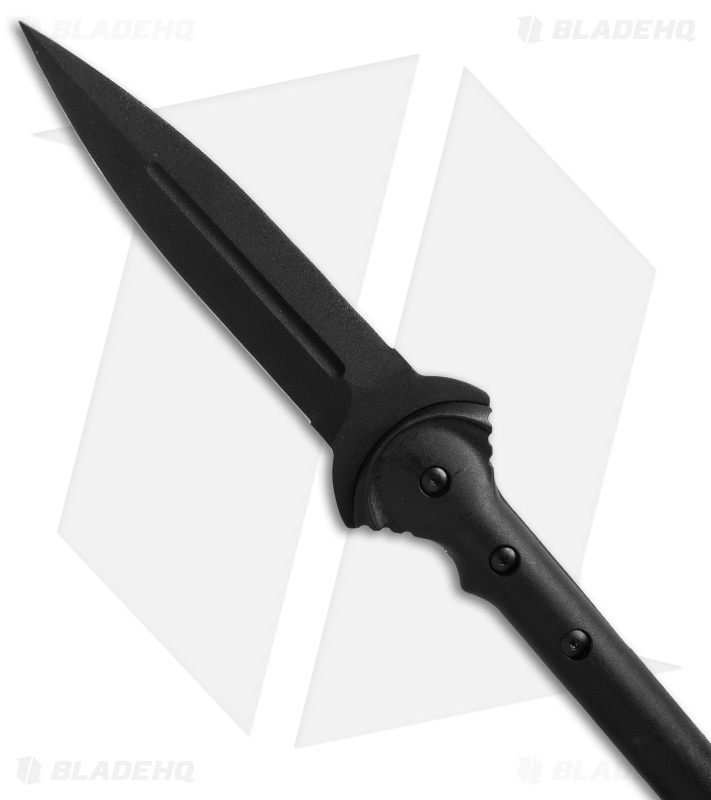
5. Schrade SCHSP1 / SCHSH Spearhead — budget, lash-on workhorse - Source 7.9/10
Source: BladeHQ
Why it stands out
If you want something you can throw in a side pouch and forget until needed, this hunter spear head is the no-drama option. It’s a flat, lash-on plate with a solid pointed tip, sized to bite securely onto a sapling or broom handle. Think “field-proof and cheap to replace,” not flashy magnum spear marketing.
Materials & build
Most SCHSP/SCHSH runs use coated carbon steel with a sensible temper—tough enough for prying and thrusting without being brittle. That’s the perfect balance of a high carbon content vibe you want at this price. You’ll see simple phosphate/paint finishes rather than fancy coatings; keep it oiled. Stainless versions pop up occasionally, but the carbon plate is the baseline and, frankly, the best value.
Tip geometry & control
A medium head width and adequate spear tip length give predictable penetration and good accuracy at camp distances. There are no wings/lugs, so it’s an in-out worker rather than a winged spear design for boar spear hunting retention. Control depends on your lashing job and the shaft you choose.
Real-world use cases
-
Convert a native spear – wooden shaft you cut on site; keep the head in your kit as a just-in-case tool.
-
Creekline food gathering and general camp prodding where you’d rather not risk your survival knife.
-
Training days: cheap enough to practice carving seats, testing lash patterns, and learning balance on different timbers.
Packability & carry
Outstanding. The flat head breaks down to nothing in a pouch. Add cordage and a bit of tape and you’ve got a complete “build a spear” module that rides next to your basic shovel and med kit.
Assembly & ease of use
Two big wins: lots of lashing real estate and forgiving geometry. Carve a split seat in the shaft, bind hard (figure-8 plus constrictor knot works well), and check for wobble. Because there’s no fixed ferrule, you choose the right size shaft. It’ll also play nicely with a cut-down trekking pole, or a small wooden handle for close tasks.
Weather & corrosion
Carbon needs light care—wipe down, oil, done. If you want near-zero maintenance, seek the rarer stainless steel spear variant, but expect a hit to edge “bite” versus carbon.
Safety & legal
Use a stout tip cover; a bit of hose with a cap works if the supplied cover goes missing. Laws differ by state/territory (some treat spearheads alongside other restricted categories—similar spirit to category l in some contexts). Know your local rules.
Pros
-
Dirt-cheap, tough, and easy to replace; great learning platform.
-
Ultra-packable; rides unnoticed in any kit.
-
Flexible with almost any wood spear shaft; you control balance.
Cons
-
No winged retention; not for big-animal containment or wounded game movements management.
-
Performance depends on your lashing and shaft choice.
-
Plain finish needs periodic oil to avoid rust.
Best for
Budget-minded readers who want a reliable, lash-on functional survival spear tips solution that prioritises packability and field improv over polish.
Buying advice & real-world scenarios
Not every spear suits every trip. Use these quick matches to pick the right tool for the job.
1) Wet season, mud, and creek lines (Queensland summer)
-
Pick: United Cutlery M48 or SOG Spirit Spearhead.
-
Why: Stainless/treated heads and polymer bits shrug off water. Minimal maintenance, easy to clean to a working razor likeness.
-
Watch for: Slippery grips—add tape or cord. Keep the Vortec sheath (or similar) on when moving.
2) Property control around thick scrub
-
Pick: Cold Steel Boar Spear (classic winged spear design).
-
Why: Lugs/guards help manage wounded game movements and keep the point in the vitals target area.
-
Watch for: It’s long and doesn’t break down—better in a ute than on foot.
3) Backpacking, ultralight, just-in-case
-
Pick: SOG Spirit or Schrade SCHSP1/SCHSH hunter spear head.
-
Why: Head-only modules are tiny; lash to a native spear – wooden shaft you source on site.
-
Watch for: Your lashing job and shaft choice control balance and accuracy. Carve a split seat for the right size fit.
4) Training, skills days, and budget builds
-
Pick: Schrade SCHSP1/SCHSH.
-
Why: Cheap, tough carbon plate—great for learning lashing patterns and balance without fear of scratches.
-
Watch for: Oil the carbon to prevent rust.
5) Traditional reach with all-round utility
-
Pick: Cold Steel Assegai (Long Shaft).
-
Why: Classic traditional spear handling; decent for controlled thrusts and even short practice throws.
-
Watch for: Full length is awkward on public transport; think rural use.
Steel quick-guide (what to choose)
-
Carbon steel / high carbon (the perfect balance of a high carbon content): excellent bite and toughness; needs oil.
-
Spring steel: great elasticity for knocks, resists blade fracture.
-
High manganese steel: work-hardening, natural resilience.
-
Stainless steel blade: easiest upkeep; pick reputable heat treats among the best modern blade-smithing steels.
Heads vs shafts (how to decide)
-
Fixed-shaft = control and ready-to-go handling (Assegai, Boar).
-
Takedown tactical spears = better transport; ensure ferrules are stout.
-
Head-only = best packability and field improv; your wood spear shaft choice sets the feel.
Red flags when shopping
-
Over-marketing (e.g., “cyclone spear,” “magnum spear,” “sabotage tactical survival spear,” “kommando talon survival spear & vortec”). Hype isn’t a substitute for steel and fit-up.
-
Odd catalogue tags like spea m, esdf m, or even path of exile showing up in listings—treat as search noise.
-
Sites collecting more personal data than they need; read the privacy policy. Large catalogue pages (that “home page – runnings” vibe) often reskin distributor feeds—double-check specs.
Fit & feel
-
You want a strong center-of-gravity close to the hand for control.
-
Spear tip length and head width dictate penetration and tracking; narrow is faster, broad stabilises.
-
Decorative feather accents or leather wrappings – overall length claims are fine if they improve grip; ignore them if they’re just cosplay.
Care, maintenance & training
1) Sharpening & edge care
-
For carbon, spring steel, or high manganese steel heads, carry a small diamond plate and a fine ceramic. Work the primary bevel lightly, then finish with a few strops to razor likeness. Stainless is slower to abrade; be patient.
-
If you roll the pointed tip, re-form it with short, even strokes. Chips on a stainless steel blade take longer—don’t chase perfection in the field; aim for “working sharp.”
2) Rust prevention (field-simple)
-
Wipe dry after rain or creek crossings. A smear of oil, paste wax, or even food-safe mineral oil slows rust on carbon.
-
Check under wraps (cord, leather wrappings – overall length claims) where moisture hides. If wraps stay soggy, remove, dry, and rewrap.
3) Hardware & shaft checks
-
Before each outing, check screws, ferrules, and joints. Loose joints invite flex and eventual blade fracture.
-
On lash-on heads, renew bindings and replace stretch-prone cord. A split seat in the stick reduces wobble and keeps the head aligned.
4) Sheaths & transport
-
Use the sheath—polymer or leather—with a positive catch (that Vortec sheath vibe is handy). Add drain holes if water pools.
-
Never toss an unsheathed head next to a jungle machete or tarp; it will cut what you care about.
5) Storage & long spells between trips
-
Clean, dry, oil, and store the spear vertical or horizontal with the tip covered.
-
For modular parts that break down, bag the head separately so oil doesn’t wick into fabric or paper maps.
6) Training & drills (start slow)
-
Thrust mechanics: From a balanced stance, drive straight lines to a chest-height target. Focus on track and recovery, not speed.
-
Retention practice: With a tyre or sandbag, practise penetrate–pause–withdraw to learn how much force it takes to stop and reset.
-
Throwing (if your model allows): Begin at short distance, build good accuracy, and stop if you see wobble on impact (joint flex = danger).
-
Field improv sessions: With head-only kits, practise carving the right size seat in different timbers and lashing until you can assemble a solid wood spear shaft in minutes.
7) Field fixes
-
Carry a short section of fuel hose as a tip cover, spare cord, a couple of bolts/nuts that match your model, and friction tape.
-
If a wrap loosens, add a constrictor knot or a Spanish windlass turn to bite down.
8) Safety habits that stick
-
Sheath on the move, blade awareness at rest.
-
Don’t work around mates at full extension; call movements.
-
Treat decorative features (feathers, tassels) as potential snag points—trim if needed.
Safety & Legal Note
Safety first
-
Keep the head sheathed whenever you’re moving. Treat it like a live edge, even in a cover.
-
Maintain clear zones. Don’t thrust or test penetration with people, pets, or gear within reach.
-
Control direction of force. Thrust into stable backstops (timber, tyre, sandbag), not brittle surfaces that can splinter shards back at you.
-
PPE helps: eye protection for practice, gloves for lashing and reshaping shafts, and boots with solid toe caps in scrub.
Training
-
Start slow, focus on mechanics and good accuracy, then build speed. If you see joint wobble or hear ferrules creak, stop—loose interfaces can lead to damage or blade fracture.
-
Throw only with models designed for it; most tactical spears are thrust-first.
Legal (Australia)
-
Laws differ by state/territory and change over time. Spearheads and full-length spears can fall under edged/prohibited-weapon rules (sometimes grouped with classes similar in spirit to category l-style restrictions).
-
Before buying, carrying, transporting in a vehicle, or practising on public land, check current regulations for your jurisdiction (Police or Justice department websites). Requirements may include legitimate-reason tests, transport conditions (locked case, separated from occupants), or location-based restrictions (public parks, reserves).
-
Private property use still carries duties of care. Keep tools secured from unauthorised access and store sheathed.
-
Shipping: some couriers have their own policies for edged tools; verify before ordering.
Conclusion: the quick decision ladder
If you want one takeaway, match design to what you’ll actually do in real-world survival situations:
-
Need retention and authority around scrub? Pick the winged spear design of the Cold Steel Boar Spear.
-
Want classic handling and reach that can also be thrown? Cold Steel Assegai (Long Shaft).
-
Prefer a modern, low-maintenance tool that’s ready the moment you pop the boot? United Cutlery M48.
-
Chase grams and pack space above all? Go head-only: SOG Spirit or Schrade SCHSP1/SCHSH on a solid wood spear shaft/native spear – wooden shaft.
Steel choice is simple: carbon steel/spring steel/high manganese steel for bite and toughness; stainless steel blade/stainless steel spear if you want easier upkeep. Balance the spear tip length, head width, and strong center-of-gravity to how you move—thrust-first stability beats specs you’ll never use. Keep edges covered, hardware tight, and sheaths (that Vortec sheath vibe) locked when you’re on the move. The tip of the spear that works is the one you’ll actually carry, maintain, and control.
Frequently Asked Questions
1) Is a spear really useful if I already carry a survival knife and jungle machete?
Yes—reach and control. A spear lets you probe, pin, and manage hazards at distance without risking your hands or knife tip. It complements, not replaces, a survival knife.
2) Which steel should I choose for the head?
For edge bite and toughness, look for carbon steel, spring steel, or high manganese steel—often marketed as the perfect balance of a high carbon content or having the right characteristics of this steel for toughness. If you hate maintenance, stainless is the best option.
3) Are “dual blades”, “cyclone spear”, or “magnum spear” designs worth it?
Usually no. Marketing claims like “dual blades” or spiralled cyclone spear edges often add sharpening hassle without practical gain. Any tool hyped for causing severe internal organ damage is a red flag—focus on control, legality, and real utility instead.
4) Fixed shaft, takedown, or head-only—which carries best?
-
Fixed shafts handle beautifully but rarely break down.
-
Takedown tactical spears are easier to transport; inspect joints to avoid blade fracture.
-
Head-only systems (e.g., hunter spear head) win for packability—lash to a found, right size shaft.
5) What length/shape penetrates best for throws?
Longer spear tip length with narrower head width tracks straighter and gives good accuracy for a powerful throwing spear. For retention (e.g., boar control), a broader head with lugs—boar spear hunting logic—helps manage wounded game movements in the vitals target area.
6) How should a spear feel in hand?
Stable, with a grippy spear handle and a strong center-of-gravity close to your leading hand. Decorative touches (feather accents, leather wrappings – overall length) are fine if they improve grip and don’t soak up water.
7) How do I improvise a shaft safely?
Split the end of a straight sapling, seat the head (SOG/Schrade styles), bind hard with a constrictor knot and tape. Test thrusts on a tyre. Swap shafts until the balance feels right—your material choice of hunting spear shaft sets control.
8) Any shopping red flags I should know?
Watch for nonsense catalogue tags (spea m, esdf m) or SEO bait terms (path of exile) in listings. On multi-brand catalogue pages (that home page – runnings vibe), double-check specs. Read the privacy policy—don’t overshare personal data. Names like kommando talon survival spear & vortec or sabotage tactical survival spear are brand fluff; judge the steel, fit-up, and sheath.
9) Does stainless always mean worse cutting?
No—many among the best modern blade-smithing steels are stainless. But cheap stainless can roll or blunt faster. If you go stainless, pick reputable heat-treats and keep the edge at a practical razor likeness.
10) What’s the safest way to transport and store a spear?
Use a real sheath (that Vortec sheath-style retention helps), keep the point capped, and carry it secured in the ute—don’t let it rattle near tools or golf carts. On foot, sheath up before moving.