
Best Survival Tent: Top 5 tents & How to Choose
If your shelter fails at 2 am in a squall, everything else in your survival kit becomes secondary. A good tent keeps body heat in, harsh elements out, and buys you the quiet, dry hours you need to reset, sleep, and make better decisions the next morning. Whether you’re pushing long distances, car-camping between outdoor adventures, or dealing with a roadside car accident that forces an unplanned night out, the right tent is the difference between a rough story and a dangerous one.
This guide breaks down the best survival tent options into practical choices you can actually carry, pitch, and trust. We’ll cover bomb-proof domes for extreme weather, smart three-season all-rounders, ultralight shelters that disappear in your pack, and a compact tube tent made from reflective mylar for short-term shelter in an emergency situation. Along the way, I’ll explain when to pick a waterproof tent with a full rain fly, when a minimalist tarp tent makes more sense, and why sometimes the safest option isn’t the lightest (or the cheapest).
You’ll also see clear pros and cons for each pick: storm performance in high winds and snow, real-world easy setup in the middle of the night, how much extra weight you’re really adding with sturdier poles and thicker material, and which models suit summer months vs cold weather. I’ll keep it plain-English and decision-focused, so you can choose a reliable shelter that fits your terrain, your gear, and your tolerance for risk.
How to choose the right survival tent (buyer’s guide)
Picking a tent isn’t just about chasing the lightest spec sheet. It’s about matching emergency shelter performance to your terrain, season, and pack style—so when an emergency situation sneaks up in the middle of the night, you’ve got a reliable shelter that actually holds up.
1) Climate & season (three-season vs four-season)
-
Three-season tent: Built for spring to summer months and shoulder seasons—great ventilation, bug mesh, full rain fly options, and lighter pole sets. Ideal for most outdoor adventures in Australia where snow loading is rare.
-
Four-season tent / winter tents: Heavier fabrics, burlier poles, steeper walls for shedding snow, and more guy points for high winds. Pick this if alpine trips, exposed ridgelines, or a possible snow storm are on the cards.
-
If you’re unsure, buy for the cold weather you’ll actually face. Over-arming with a heavy four-season tent when you only do coastal weekends adds extra weight you’ll resent.
2) Wind, rain & storm-worthiness
-
Look for a waterproof tent with a full-coverage rain fly (down to near ground level) and deep bathtub floor.
-
Guy-out points and solid tent stakes (carry a few aluminum stakes plus one or two long spikes for sand).
-
Pole design matters: hubbed aluminum poles with crossing geometry increase rigidity and spread loads in high winds.
-
For truly foul weather, domes beat elongated tunnels, and double-wall designs manage condensation better than single-wall in humid storms.
3) Weight & packability (and when “light weight” bites back)
-
Ultralight is brilliant over long distances, but shaving grams can mean thicker material goes out the window. Decide your comfort with trade-offs:
-
Compact tent / small tent: great for stealth and pack space, but tighter headroom and less gear storage.
-
Ultralight fabrics need more care; consider a footprint or tarp tents skillset to protect the floor.
-
-
Reality check: adding 300–500 g for tougher fabric, better zips, and stronger poles can make a huge difference in storm performance—often worth the extra weight.
4) Capacity, livability & layout
-
Single person shelters are fast and tiny; 2–3 person tent models add elbow room, a better vestibule for boots and rain gear, and easier kit management.
-
Two doors reduce midnight gymnastics. Good vestibules keep wet packs outside but covered.
-
Venting options (top vents, mesh inner) reduce condensation and help retain body heat without drip misery.
5) Setup speed & simplicity
-
In lousy weather, easy setup is a safety feature.
-
Freestanding designs pitch fast almost anywhere (even over a big rock platform) and let you shift the tent before staking.
-
Colour-coded clips and pre-attached rain fly options are gold when you’ve had a late start and daylight’s gone.
6) Materials, zips & repairability
-
Fabrics: silnylon and silpoly handle UV and rain well; consider higher denier floors for abrasion.
-
Zips: waterproof coil zips are common—carry a tiny repair kit and know the quick fix for zipper failure (crimp the slider gently to regain bite).
-
Poles: quality aluminum poles beat mystery alloys. Pack a pole splint.
-
Always keep a mini repair pouch in your tent bag: patches, seam sealer, cord, spare tent stakes.
7) Visibility, safety & emergency add-ons
-
Bright colors are easier to spot during a rescue; subdued tones blend in if you prefer low profile.
-
For short-term shelter in a glovebox or survival kit, a mylar tube tent or toughest mylar emergency tent pairs well with a space blanket/emergency blanket, glow stick, and first aid kit.
-
A simple water collector can be rigged from a tarp or fly drip line—handy in dry camps.
8) Price point & value
-
A good budget tent can work if you upgrade pegs and guyline and accept a little extra weight.
-
Higher price point models earn their keep with better storm performance, longer life, and easier field repairs.
9) Special cases & alternatives
-
Tarp tents: brilliant light weight option if you’re confident pitching near natural shelter (trees, rock walls).
-
Frame tents: overkill for most carry-in trips, but excellent as long-term base camp in survival scenarios when you’re not carrying it far.
-
Vehicle kits: keep a compact emergency shelter + emergency sleeping bag in the car for a roadside car accident or breakdown—no excuses here.
Top 5 Picks (spec snapshots, pros/cons, scorecards)
Total: 8.3/10
Source: Hilleberg
1) Hilleberg Allak 2 — best for cyclone-style winds & true four-season trips
Why it’s here: A freestanding geodesic dome that laughs at high winds, driving rain, and spindrift. Steep walls, multiple crossing aluminum poles, and a full-coverage rain fly make it a tiny bunker. Not the lightest—absolutely the calmest when the weather throws a tantrum.
Spec snapshot (practical):
-
Style: Double-wall dome, fully freestanding
-
Season rating: Four-season tent (handles snow storm loads with careful guying)
-
Pack/weight feel: Heavier than a three-season tent; you notice the extra weight, but you get real storm insurance
-
Space: Comfortable small tent for two; two vestibules for wet rain gear and boots
Best use cases: Exposed alpine camps, coastal headlands with gale warnings, shoulder-season trips where “just a shower” becomes a night of chaos.
Pros: World-class storm pitch; outstanding waterproof tent performance; proper guy-out geometry; easy to re-tension in the middle of the night.
Cons: Pricey price point; bulk in the pack; overkill for summer months beach weekends.
Scorecard (weighted to /10):
-
Weather resistance 10/10
-
Durability & repairability 10/10 (bombproof fabrics, serious tent poles)
-
Livability 8/10
-
Weight & packability 6/10
-
Ease of setup 8/10
-
Versatility 9/10
-
Value for money 7/10
-
Availability in AU 6/10
2) MSR Access 2 — best light winter/shoulder-season snow tent - Total: 8.15/10

Source: Outdoor Action
Why it’s here: Bridges the gap between a three-season tent and a heavy expedition dome. Strong hubbed aluminum poles, warmer inner, and a fly that hugs close for better heat retention—without the “drag a heavy tent” vibe.
Spec snapshot (practical):
-
Style: Semi-freestanding double-wall with hubbed pole design
-
Season rating: “Light winter tents”/shoulder season; perfect for frost, wind-slab, and spring snow
-
Pack/weight feel: Respectably light weight for what it handles
-
Space: Proper two-door/two-vestibule layout; fits a 2–3 person tent brief in a pinch if one’s a single person with big kit
Best use cases: Alpine plateaus, Tassie shoulder seasons, snow-line trips where you want warmth and wind stability without carting a tank.
Pros: Strong in wind; warmer inner; decent easy setup even in gloves; solid storm bones.
Cons: Not a full expedition dome in savage blizzards; manage condensation carefully.
Scorecard (weighted to /10):
-
Weather resistance 9/10
-
Durability & repairability 8/10
-
Livability 7/10
-
Weight & packability 8/10
-
Ease of setup 9/10
-
Versatility 8/10
-
Value for money 8/10
-
Availability in AU 8/10
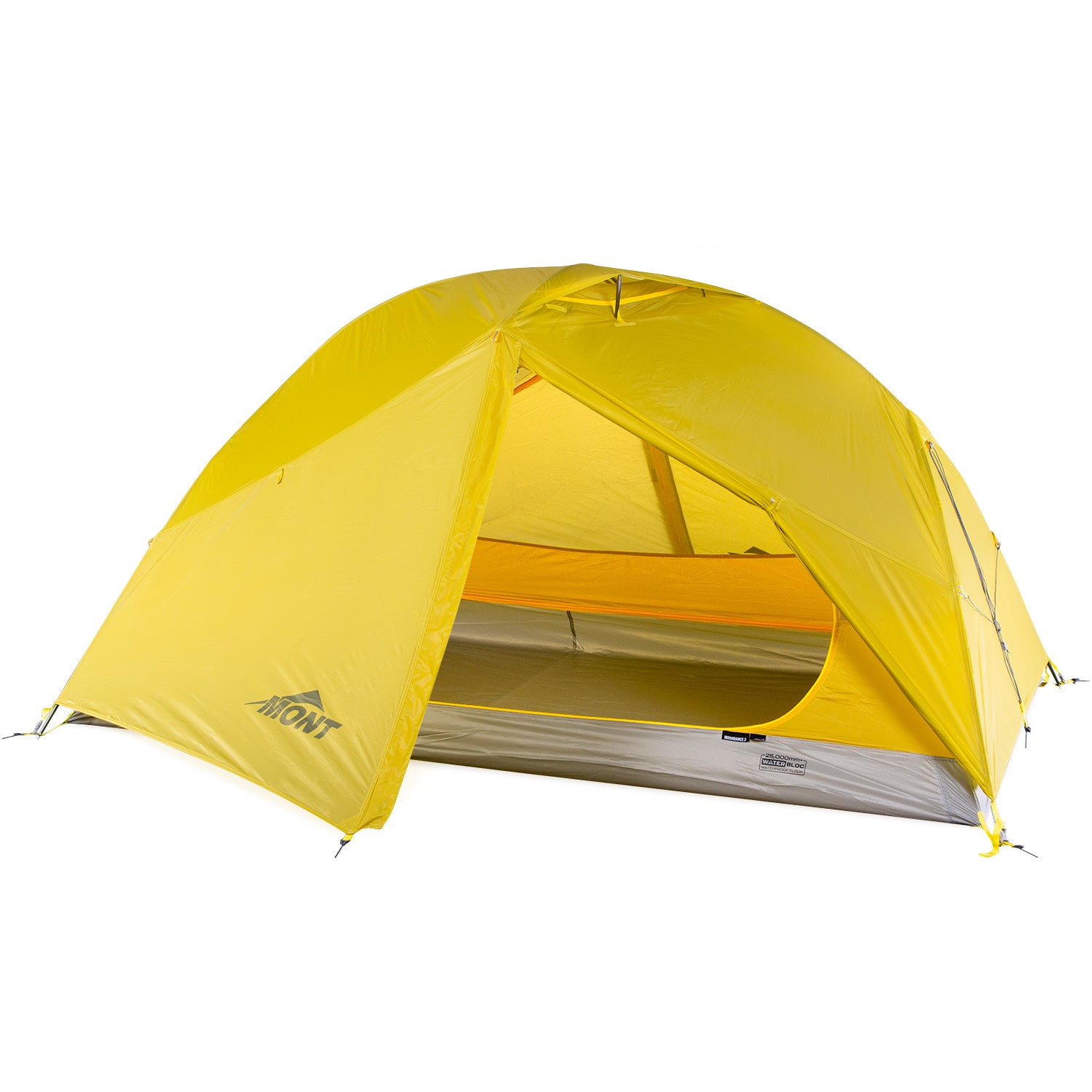
3) Mont Moondance 2 — best Australian three-season all-rounder - Total: 8.3/10
Source: mont.com.au
Why it’s here: A locally loved three-season tent that nails the trifecta: good storm manners, honest weight, and real-world easy setup. Big doors, handy vestibules, and a full rain fly that actually reaches down.
Spec snapshot (practical):
-
Style: Freestanding double-wall dome
-
Season rating: Three-season, with stout guying for rough nights
-
Pack/weight feel: Best lightweight tent feel without babying it; compact in a tent bag
-
Space: Roomy for two; sensible headroom; great for outdoor adventures and mixed trips
Best use cases: East-coast weekenders, long distances on the Great Dividing Range, mixed-weather trips where you might cop a squall at 2 am.
Pros: Excellent balance of comfort, weight, and storm-worthiness; strong local availability in Australia; good warranty support.
Cons: Not for deep winter; add a few aluminum stakes for sand or rock.
Scorecard (weighted to /10):
-
Weather resistance 8/10
-
Durability & repairability 8/10
-
Livability 8/10
-
Weight & packability 8/10
-
Ease of setup 9/10
-
Versatility 8/10
-
Value for money 9/10
-
Availability in AU 10/10
4) Tarptent Double Rainbow / DW Ultra — best for ultralight miles & long distances - Total: 7.45/10

Source: Tarptent.com
Why it’s here: A tarp tents classic that pitches fast, goes long distances with minimal extra weight, and still gives you doors, vestibules, and legit storm capability if you pitch smart and use good tent stakes.
Spec snapshot (practical):
-
Style: Hybrid single/double-wall depending on inner; can use trekking poles to boost storm rigidity
-
Season rating: Strong three-season; shoulder cold weather with careful site choice and guying
-
Pack/weight feel: Featherweight compared to domes; truly compact tent
-
Space: Great solo palace; tight but workable for two
Best use cases: Thru-style walks, bike packing, “speed over body weight” missions where you still want bug protection and a real rain fly.
Pros: Light weight without going full bivvy; quick pitch; excellent value for money for grams saved.
Cons: More attention to natural shelter and site choice; watch floor abrasion; add a footprint if you camp on a big rock or sharp gravel.
Scorecard (weighted to /10):
-
Weather resistance 7/10
-
Durability & repairability 7/10
-
Livability 7/10
-
Weight & packability 9/10
-
Ease of setup 8/10
-
Versatility 7/10
-
Value for money 8/10
-
Availability in AU 6/10
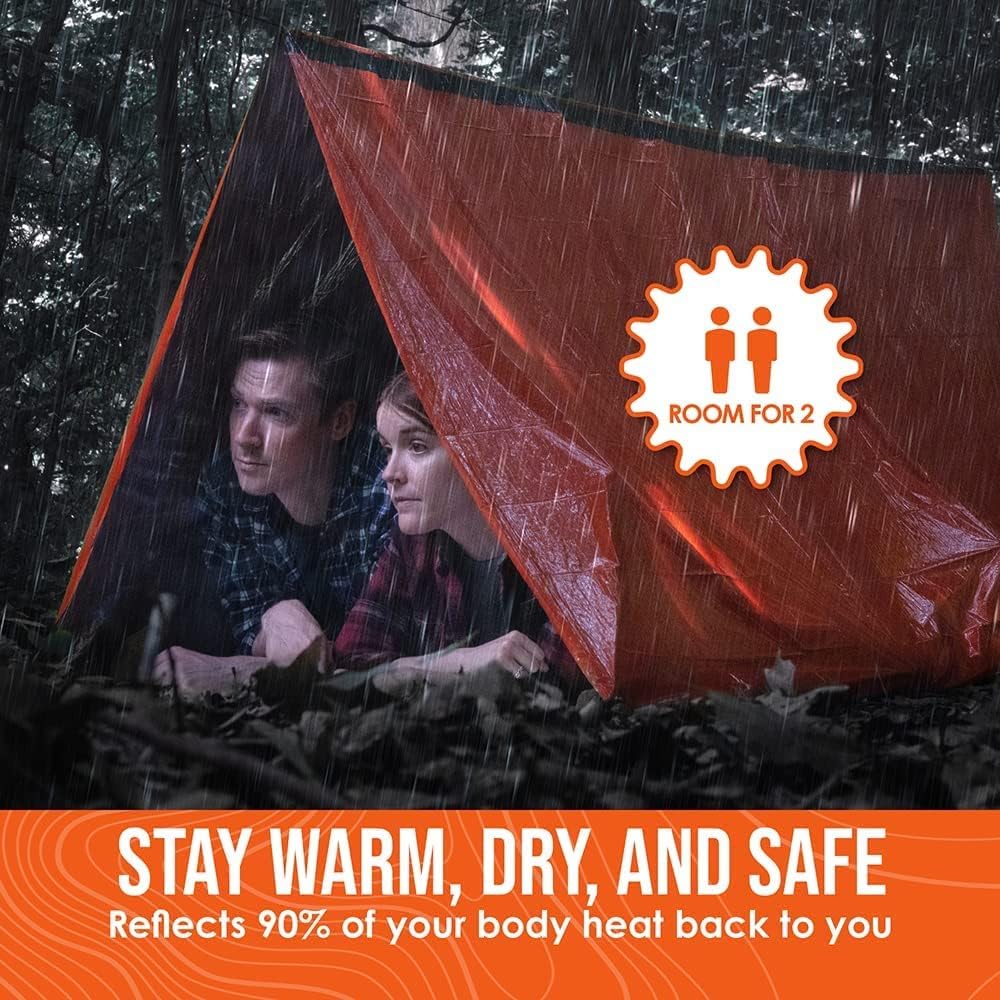
5) Go Time Gear “Life Tent” (mylar tube tent) — best glovebox emergency shelter - Total: 6.4/10
Source: gotimegear
Why it’s here: The toughest mylar emergency tent style we’ve tested for glovebox and day-pack backups. It’s not a primary home; it’s a fast short-term shelter that traps body heat, gets you dry, and buys time in an emergency situation. Think roadside car accident, wrong spur track, or waiting out weather for the next morning.
Spec snapshot (practical):
-
Style: Reflective mylar tube tent; string it between trees or trekking poles; anchor with aluminum stakes or a big rock
-
Season rating: Emergency only; great heat reflection; pair with space blanket/emergency blanket and emergency sleeping bag
-
Pack/weight feel: Pocketable; virtually no extra weight in the survival kit or emergency kits
-
Space: Single person (tight) or two in a pinch
Best use cases: Backup in glovebox, day-hikes, school trip leaders’ first aid kit/survival gear bundle; storm wait-outs where building your own shelter is unsafe or time-consuming.
Pros: Ultra-compact, near-zero weight; super fast to rig; visible bright colors options; works with a glow stick for night marking; can even act as a water collector when angled.
Cons: Condensation; fragile compared to woven fabrics; noisy in high winds; poor long-term durability; prone to zipper failure—oh wait, there’s no zip (one less only issue to worry about).
Scorecard (weighted to /10):
-
Weather resistance 5/10 (fine as short-term shelter; not a storm tent)
-
Durability & repairability 4/10
-
Livability 3/10
-
Weight & packability 10/10
-
Ease of setup 9/10
-
Versatility 6/10
-
Value for money 9/10
-
Availability in AU 9/10
Verdicts by use-case (what to pick and why)
Cutting through the noise—here’s the plain-English guide to match a tent to your trip, climate, and carry style. I’ll call out best option, best choice, and handy extras to stash in your tent bag or survival kit.
1) Best overall (storm insurance without going expedition)
Pick: Mont Moondance 2
Why: Proper waterproof tent with full rain fly, honest weight, quick easy setup, and outstanding support in Australia. Handles nasty squalls, packs small, and won’t demand a sherpa.
Add: Upgrade to aluminum stakes for sand or hardpan; throw in a tiny pole splint and zip slider fixer to dodge zipper failure drama.
2) Best lightweight for long distances
Pick: Tarptent Double Rainbow / DW Ultra
Why: Light weight and compact tent form factor that disappears in the pack over long distances. Pitch smart near natural shelter, use a footprint over big rock or sharp gravel.
Caveat: Mind condensation on humid nights; tensioning and site choice make a huge difference.
3) Best for high winds & extreme weather
Pick: Hilleberg Allak 2
Why: Geodesic aluminum poles, multiple crossings, and a deep-skirted fly create a tiny bunker for high winds and extreme weather. If a coastal low spins up overnight, this is the calmest option.
Trade-off: You’ll feel the extra weight, but that buys genuine storm margin.
4) Best light winter / alpine shoulder season
Pick: MSR Access 2
Why: Warmer inner, stout hubbed pole design, and close-hugging fly manage frost and a surprise snow storm without the burden of a truly heavy tent.
Tip: Anchor with solid tent stakes, build short snow walls if needed, and vent carefully to preserve body heat without soaking the inner.
5) Best budget tent (value without the regrets)
Pick: Mont Moondance 2 (often best price point locally)
Why: Sensible weight, full coverage, quality materials. Add better pegs and guyline and you’re ahead of most budget tent options.
Reality check: Don’t chase the absolute lowest price; a snapped pole or leaky seam in the middle of the night is false economy.
6) Best single person (stealthy and simple)
Pick: Tarptent Double Rainbow (solo) or MSR Access 2 (solo with winter bias)
Why: Both pitch fast and keep the pack trim. The Access runs warmer for cold weather; the Tarptent wins when grams matter.
7) Best 2–3 person tent for mixed trips
Pick: Mont Moondance 2 for two; step to a 3P variant if carrying more survival gear or a dog.
Why: Two doors, generous vestibules for rain gear, and usable headroom. A small tent with smart layout beats a sloppy 3P that flaps all night.
8) Best waterproof summer setup
Pick: Moondance 2 (mesh inner + full rain fly)
Why: Excellent airflow for summer months while staying sealed when the seabreeze turns sideways.
Add: A shade tarp tents pitch for midday—gives you a breezy living room without extra weight on the main shelter.
9) Best glovebox / short-term emergency shelter
Pick: Go Time Gear Life Tent (mylar tube tent)
Why: Pocketable tube tent that traps body heat and gets you dry after a car accident or navigational whoopsie. It’s true short-term shelter: think hours, not weeks.
Pack with it: Emergency blanket/space blanket, compact first aid kit, glow stick, and cordage. Angle the fly line to act as a simple water collector during showers.
10) When to build your own shelter instead
If you’ve got time, skills, and trees, own shelter options (tarp + cord + stakes) can be brilliant—especially for tarp tents aficionados. But in a fast-moving emergency situation, a purpose-built reliable shelter beats improvisation nine times out of ten.
Care, repairs & field tips (make your tent last and behave)
A little TLC goes a long way. Here’s the short list that keeps your reliable shelter dry, quiet, and standing when the weather has other ideas.
Pitching smarts (site selection first)
-
Wind & exposure: Face a solid side to high winds and use all guy points. If you can, tuck behind natural shelter (low scrub, boulders) rather than camping on a ridge.
-
Ground: Clear sharp sticks and check for a sneaky big rock under the floor. A footprint or polycro sheet protects lighter fabrics and saves you from cold-conducting ground that robs body heat.
-
Drainage: Slight rise beats a hollow. In heavy rain, angling the rain fly can create a basic water collector—run the drip into a bottle.
Anchors & guylines (small upgrades, huge difference)
-
Carry mixed tent stakes: standard pegs plus a couple of long nails for sand; add aluminum stakes for strength-to-weight.
-
Pre-tie guyline tensioners. In an emergency situation or middle of the night squall, quick tension beats fumbling with knots.
-
In rocky country, build deadmen with a big rock or stuff-sacks filled with gravel/snow.
Condensation & ventilation (stay warm without the drip)
-
Double-wall tents: crack the vents and leave a thumb of fly–ground gap if safe.
-
Single-wall or tarp tents: pitch with airflow in summer months; lower and tighter for cold weather.
-
Keep wet rain gear in the vestibule. A small pack towel stops the “everything is damp by the next morning” problem.
Zips, sliders & common failures
-
Zipper failure fix: if teeth aren’t biting, gently crimp the slider sides with pliers to restore tension. Clean grit from coils with a soft brush.
-
Lubricate occasionally (silicone stick, not oil).
-
Store doors un-tensioned—stretching fabric loads the zip and invites failure.
Poles & fabrics (field repair basics)
-
Always pack a pole splint. For bent aluminum poles, sleeve the break, straighten gently, and re-guy to share load.
-
Seam sealer and Tenacious Tape live in your tent bag. On a wet night, patch outside first; reinforce inside when dry.
-
Thicker material on floors lasts, but treat all tents like ultralights: no dragging, lift when shifting.
Heat, stoves & safety
-
No open flames inside—ever. If you’re running a hot brew under a vestibule lip in rain, keep the burner well out and vent aggressively. Trapping body heat is good; trapping CO is not.
Pack, dry, store (avoid the funk)
-
If you must pack wet, stuff the fly separate to keep the inner dry. Air it out at the first sun break.
-
At home, dry completely before storage to dodge mildew and delamination.
-
Loosely store; compress only for travel. Long-term compression shortens fabric life.
Emergency add-ons worth carrying
-
Emergency blanket / space blanket (doubles as radiant liner in a pinch), emergency sleeping bag, mini first aid kit, glow stick for marking lines at night, a few metres of cord, spare tent stakes, and duct tape. These are low extra weight items that solve high-stress problems fast.
Conclusion (what to pack and what to pick)
If you take one thing from this guide, make it this: choose for the worst night you reasonably expect, not the best. In a genuine survival situation, a solid, fully guyed tent that holds shape in high winds is worth more than a spec sheet that chases light weight at all costs. For most readers, the Mont Moondance 2 is the safest starting point; step up to the Hilleberg Allak 2 if extreme weather is routine, or go Tarptent when long distances and gram-counting rule the trip.
Before your next outing, lay out your shelter system on the floor and confirm you’ve got the small but powerful extras: upgraded tent stakes, a pole splint, a tiny zip repair slider, and a square of footprint fabric. Toss in additional items for margin—an emergency blanket or space blanket, a glow stick for guyline visibility, and a compact first aid kit. If you carry a mylar tube tent in your glovebox, practise pitching it once at home; that five-minute drill will save a lot of time when it’s cold, wet, and you’re racing the weather.
Travelling with mates? Make sure capacity and livability match your crew. A 2-3 person tent with two doors and decent vestibules often beats squeezing into a small tent where nobody sleeps. If you prefer to build your own survival shelters with a tarp and cord, keep a ready-to-go emergency shelter in the car as a fallback—redundancy is cheap insurance.
Pick a tent that you’ll actually bring, pitch, and maintain. That’s the best survival tent.
Frequently asked questions (FAQ)
1) Three-season tent or four-season tent—how do I decide?
Buy for the coldest, windiest conditions you’ll realistically hit. If snow, spindrift, and gale warnings are likely, lean four-season; otherwise, a robust three-season tent with a full rain fly and strong poles is smarter value.
2) What’s the simplest upgrade for stormy nights?
Better tent stakes (a mixed kit with aluminum stakes), extra guyline, and a pole splint. These weigh little and make a huge difference when the wind pipes up in the middle of the night.
3) Is an ultralight shelter safe?
Yes—if you pitch smart, manage condensation, and protect the floor. Ultralight equals low bulk and light weight, not zero compromise. In exposed sites or winter, step to a sturdier shelter.
4) Dome, tunnel, or tarp tents?
Domes with crossing aluminum poles are the most forgiving in high winds. Tunnels can be brilliant in aligned winds. Tarp tents win on speed and grams but ask more of your site selection and skills.
5) What’s the best budget tent move?
Pick a model with solid bones at a fair price point—then upgrade pegs and guyline. The Mont Moondance 2 is a frequent winner in Australia for this approach.
6) How do I prevent zipper failure?
Keep zips clean, avoid yanking under fabric tension, and carry a tiny slider repair tool. If a slider loses bite, gently crimp its sides to restore tension.
7) How do I size for one vs two people?
Solo travellers often prefer a roomy 1–2P shelter for gear spread; pairs do better in a true 2-3 person tent with two doors and vestibules. Check the actual floor dimensions, not just marketing labels.
8) What should live in my emergency kits or glovebox?
A compact emergency shelter (mylar tube tent), emergency blanket, emergency sleeping bag, first aid kit, glow stick, spare cord, and a couple of aluminum stakes. Add a small bottle to use as a water collector under a fly drip line.
9) Is it worth practising set-up?
Absolutely. A five-minute backyard run-through teaches where each line and clip goes and saves a lot of time when weather and light are against you.
10) Should I rely on building my own shelter?
If you’re skilled and have trees or rock features, building your own survival shelters can work. But for fast-moving weather or injury, a purpose-built reliable shelter is faster and safer.